How to Check a Coil Line Manufacturer Before You Order
Short answer
Quotations for a coil processing line look alike on paper, so check the company rather than the specification: who actually builds the machine, who designs the roll tooling, which control brand you can service locally, what the acceptance test proves, how long a critical spare takes, who commissions and trains, who signs the conformity documents, and whether the references run a line like yours. A trader can answer the first question in words; only a manufacturer can answer it with a plant address and machines in build.
Contents
Quotations for a coil processing line all look similar on paper. Thickness, width, line speed, motor power, a list of units. The specification is the easy part of the decision: numbers can be written by anyone, and two quotations with the same table can come from a factory of three hundred people and from an office of three.
So check the company, not only the specification. The nine questions below can be asked by e-mail in an afternoon, and the answers tell you more than any brochure. If the shortlist also crosses continents, read them together with what distance costs you: customs, freight time and service response are a separate list of questions.
1. Manufacturer or trader?#
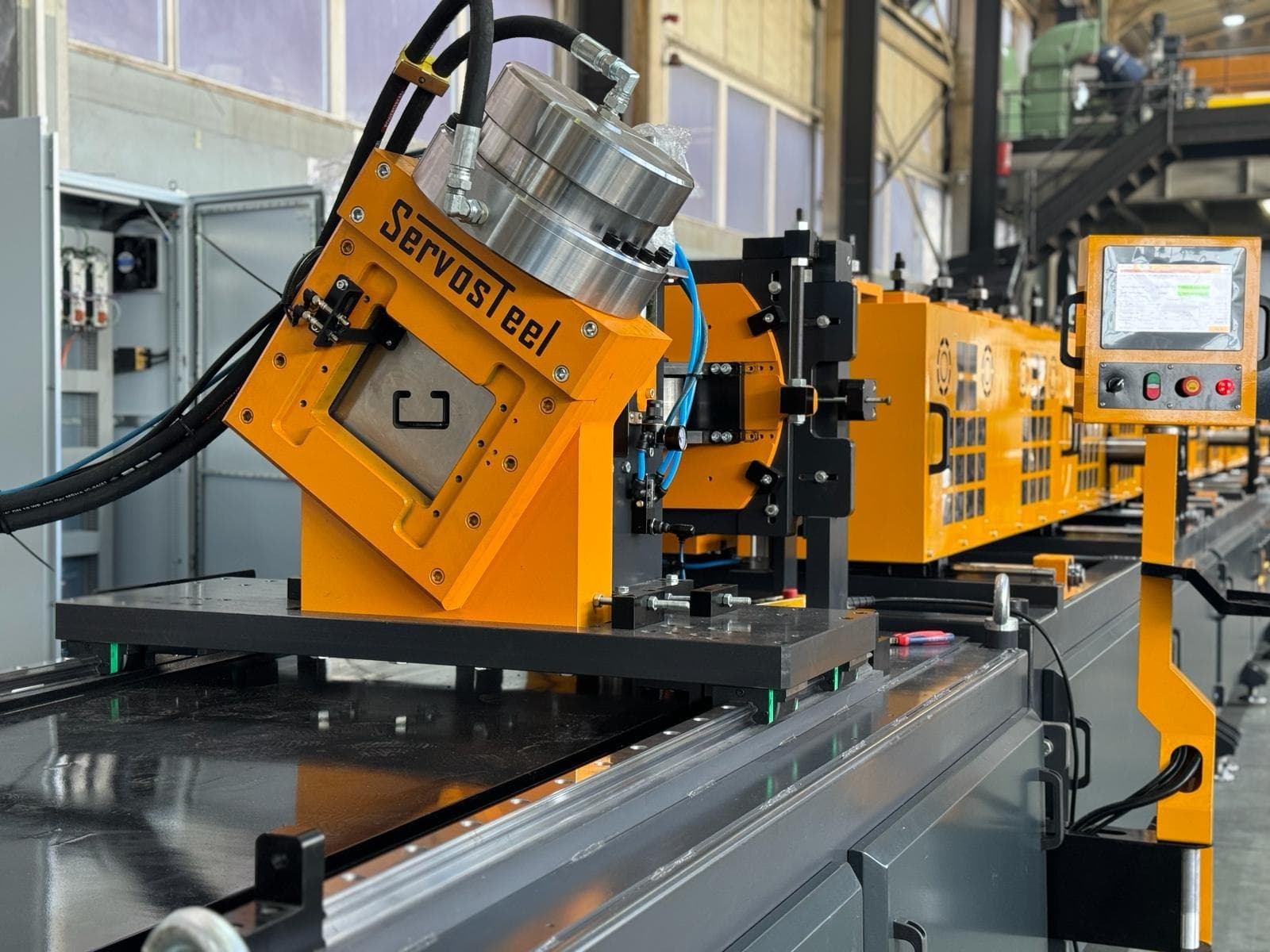
Ask for the plant address and a video call from the shop floor, on machines that are in build right now. A manufacturer will show you a line half assembled, with its frame welded and its stands being machined. A trader will show you a finished machine, a showroom or a catalogue.
This is not about status. It decides what happens when you need an engineering change during the build, a spare part in two years, or a modification when your product changes.
2. Who owns the roll tooling design?#
On a roll forming line the tooling is the product. Send your profile drawing and ask who designs the flower pattern and where the rolls are cut. If the answer is a subcontractor, ask what happens when the profile needs correction after the first trials, and how long that loop takes.
The same question applies to a slitting line, in a different form: who sets the knife and spacer program for the strip widths you run.
3. Which control system, and can you service it locally?#
Ask the brand of the PLC, HMI and drives, and then ask a second question that matters more: is there a distributor with spare stock in your country? A control fault on a brand you can source locally is a day. On a brand nobody stocks near you it is a shipment, a customs entry and a week of stopped production.
Ask also whether the program is handed over and backed up, and whether you can get parameter access for your own maintenance team.
4. Is the line one set, or parts bought in?#
A line assembled from units by different makers is not wrong in itself, but somebody has to own the interfaces: the decoiler brake against the loop control, the feeder against the press signal, the stacker against line speed. When each unit has its own supplier, the integration problem lands on you.
Ask whether decoiler, straightener, feeder, forming section, shear and stacker come from one manufacturer, and if not, who is responsible for the line as a whole.
5. What does the acceptance test actually prove?#
Every quotation mentions a factory acceptance test. What matters is what it contains. Agree in writing, before production starts:
- whose material the test runs on, in your thickness and grade,
- which section is produced and how many pieces are measured,
- the tolerances that count as pass or fail,
- who attends, and what happens if a criterion fails.
A run on the builder's material proves the machine turns. It does not prove it makes your part.
6. Spare parts: the list and the lead time#
Ask for a critical spare parts list with a lead time against each item, and ask which of those items are held in stock and which are made to order. Downtime, not the price of the part, is what a spare costs you. A list without lead times is a price list, not an answer.
7. Commissioning and training#
Who travels to your plant, for how many days, and what is included in the price. Then the part buyers forget: who trains your operators, in what language, and whether the training covers changing the tooling and the recipes rather than only pressing start.
8. Conformity documents#
A machine placed on the EU market carries CE marking, an EU declaration of conformity and a manual in the language of the country where it will be used, with a technical file behind them. These are not paperwork to sort out on arrival: ask before the order who signs the declaration and who holds the file. The same question, with different documents, applies to every market with its own conformity regime.
9. References you can actually call#
Ask for a reference running a line of similar capacity to yours, not a list of logos. Then ask that plant two questions: how long commissioning took from arrival to production, and how the manufacturer responded to the first serious fault.
How we answer these#
We build in our own plant in Istanbul: every unit of the line, from the decoiler to the stacker, is made and assembled by us, which is why the units are sized to each other and one control philosophy runs the line. Our control systems are Schneider, a brand with a global service network, and lines are commissioned on site rather than shipped and left. We have shipped to more than 48 countries; ask which installation is closest to your capacity and what that line runs, and you will get a straight answer.
If you are collecting quotations now, send us the drawing or the capacity you need. The answer you get back will be a line layout and a technical offer, and you can put the nine questions above to us in the same e-mail. The families we build are slitting lines, cut-to-length lines, roll forming lines and press feeding systems.
Frequently asked questions
How can I tell whether a supplier is the actual manufacturer?
Ask for the plant address and a video call from the shop floor, on machines currently in build, not a showroom. Then ask who designs and cuts the roll tooling. A company that buys the line from someone else can describe the machine but cannot walk you through its own production of it, and will be slow on engineering changes and spare parts later.
What should a factory acceptance test cover?
Your material, your section and your tolerances, with the acceptance criteria written into the contract before production starts. Agree who attends, how long the run is, how many parts get measured and what happens if a criterion fails. A test on the builder's own material proves the machine runs; it does not prove it runs your job.
Why does the control system brand matter?
Because service is local. A PLC and drives from a brand with distributors and spare stock in your country can be repaired in days; an unfamiliar brand turns a small fault into a shipment. Ask which brand is used, whether the program is handed over and backed up, and who can support it near your plant.
What documents does a line need to enter the EU?
Machinery placed on the EU market carries CE marking, an EU declaration of conformity and an instruction manual in the language of the country of use, with a technical file behind them. Ask in writing who signs the declaration and who holds the file before the order, not at the border.
Which line are you looking for?
Leave your name and contact details and tell us briefly which line you need; your request goes straight to our engineering team.
Call Us:+90 216 415 30 05Let's design a line for your project
Send us your profile drawing or capacity requirements — our engineering team will get back to you within 48 hours.