

Roll forming line
C+ / Sigma / Omega Profile Line
A flexible solution producing C, Sigma and Omega profiles — the load-bearers of light steel structures — on a single line; changeover between sections takes minutes thanks to adjustable roll groups and the recipe system.
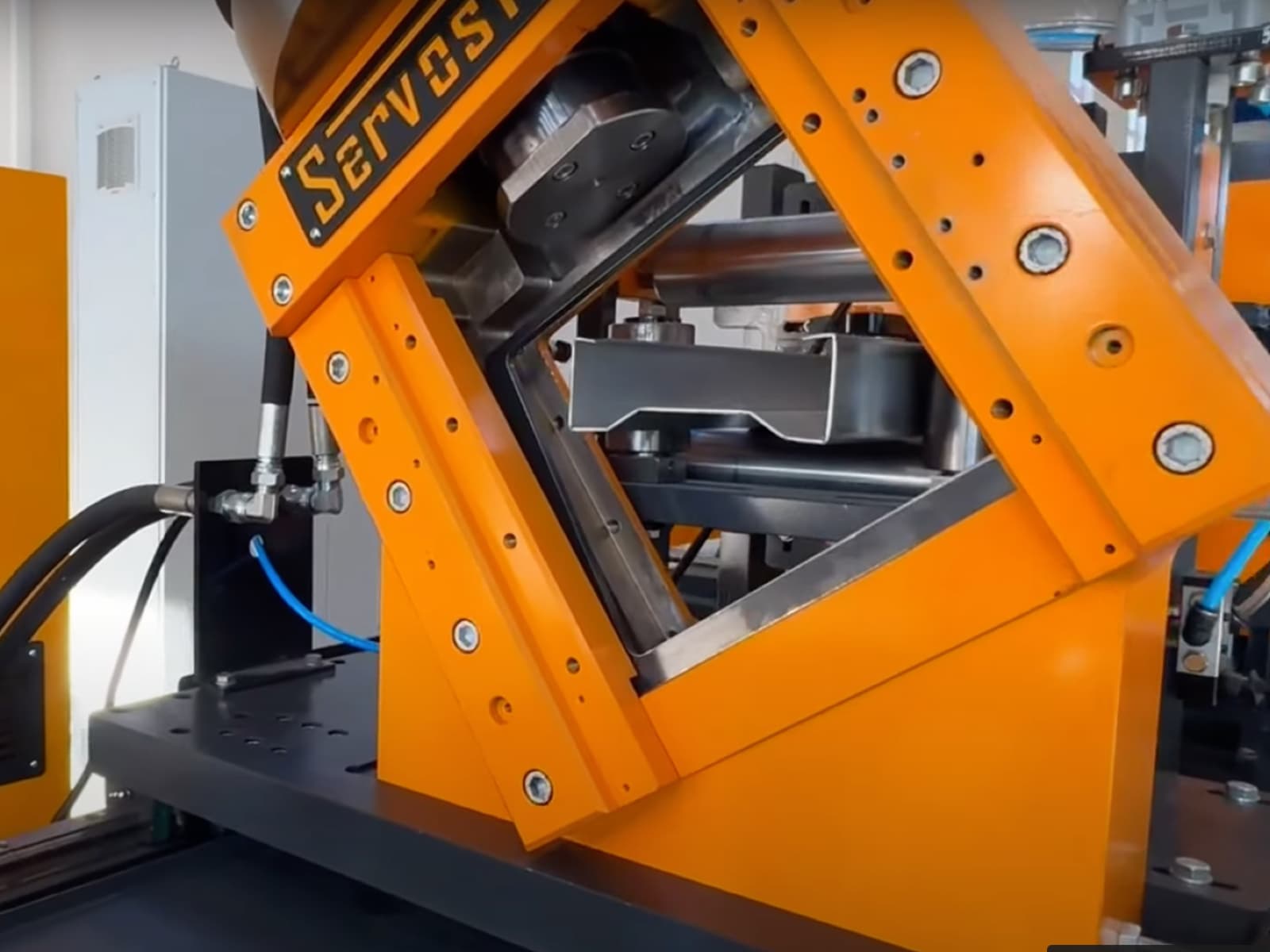
Key features
Three sections on one line
C, Sigma and Omega forms are produced on the same line with adjustable stations, lowering the investment cost.
Automatic width/height adjustment
Profile size changes are made via servo axes with HMI recipes.
Structural hole patterns
Bolt holes and service holes are punched in-line according to the project.
Profile dimensions and thickness range are defined by your project; roll tooling is designed to your drawing.
Technical specifications
| Specification | Range |
|---|---|
| Sheet thickness | 1.5 – 4.0 mm |
| Sheet width | 100 – 400 mm |
| Line speed | 10 – 36 m/min |
| Roll forming stations | 16 – 24 |
| Total motor power | 11 – 30 kW |
Ranges cover the series; each line is sized to your project according to profile section, material and capacity.
Get a quote for C+ / Sigma / Omega Profile Line
Leave your name and contact details and tell us briefly which line you need; your request goes straight to our engineering team.
Call Us:+90 216 415 30 05Production flow
Coil loading and decoiling
Structural sections are usually rolled from pre-galvanized coil in a range of thicknesses, because the same line serves purlins, studs and framing members that are specified differently. The decoiler is sized for the heaviest coil the line will see rather than the average one — a decoiler chosen for the typical order becomes the bottleneck the first time a heavy job arrives.
Straightening
Coil set comes out before anything else. On structural profiles this is what decides whether the finished member is straight along its length: C and Sigma sections are asymmetric, so any curvature left in the strip does not simply stay as a gentle bow — it combines with the forming and comes out as twist, which is far harder to correct afterwards than a simple bend.
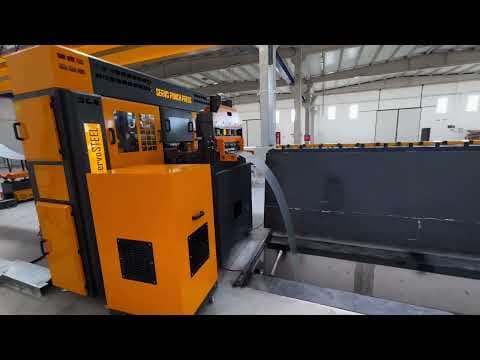
Punching to the structural pattern
Service holes, bolt holes and web openings are punched flat, in the pattern the structural design specifies. Position matters more than it does on a cladding profile: a hole in the web of a loaded member is a designed feature, and moving it is a structural decision rather than a production convenience.
Adjustable roll forming
This is what separates this line from a single-profile one. The roll groups adjust so that section width and height change without stripping the machine down, which is how three families of section share one line. The trade-off is worth understanding: an adjustable line covers a range, a dedicated line runs one section faster. Which one is right depends on how varied your order book actually is.
Flying shear
Cutting happens on the move, so the line does not stop for every piece. On structural work orders tend to be long lists of mixed lengths rather than one length repeated, so the time lost to stopping and restarting adds up quickly over a shift.
Stacking
Finished sections are collected and stacked. Long structural members are easy to damage between the line and the truck, and a bent flange on a purlin is not a cosmetic problem — it is a member that will not sit flat against the rafter it bolts to.
Applications
- Light steel framing
- Solar structures
- Prefabricated buildings
- Industrial buildings
- Purlin profiles
From the field
The rest of the channel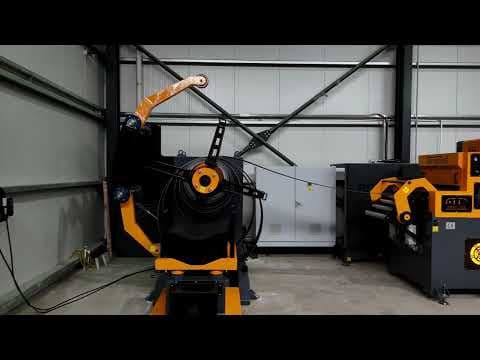
Frequently asked
Common questions
Is it possible to run all three sections on one line?
Yes, with a cassette-change configuration C, sigma and omega run on the same frame. The more sections you run, the faster a quick-change arrangement pays for itself.
What is needed when the profile height changes?
With an adjustable cassette structure the height is selected on the panel; if the section family changes, the roller set is swapped.
How long do the rollers last?
Rollers are made from 4140 steel and hardened to 58-60 Rockwell; with correct pressure settings they can produce millions of metres of profile.
Where is the real limit of an adjustable line?
The adjustment covers a range of widths and heights within one section family and the geometry it was designed around. What it does not do is turn one profile family into another: moving between C, Sigma and Omega is a roller set matter, and moving outside the designed range means new tooling regardless of how much adjustment the machine has. The honest way to specify a line like this is to give the full list of sections you expect to produce, including the ones you do not have orders for yet, and let the range be designed around that list.
Why does twist matter more than bow on structural sections?
Because a bow can often be pulled out during erection and a twist cannot. C and Sigma sections are asymmetric about at least one axis, so residual stress left in the strip does not release as a simple curve — it releases as a rotation along the length. A twisted purlin will not sit flat where it bolts, and the fix on site is usually to reject the piece. This is why the straightening stage carries more weight on a structural line than most buyers expect, and why it is worth asking about specifically.
Can hole patterns be changed without new tooling?
Hole position and spacing are recipe values, so a new layout is a data change rather than a tooling change. Hole shape and size are tooling — a different diameter or a slot instead of a round hole means a punch and die. When you plan the line, it is worth listing every hole shape you use across your product range at the start, because adding shapes later is a purchase each time while adding positions is free.
How long do the roll tools last?
Longer than most people expect, and it depends much more on what runs through them than on hours. Uncoated steel, abrasive coatings, thick material and tight radii all wear tooling faster than light galvanized sheet at generous radii. Rolls are a maintenance item rather than a consumable — they are re-machined rather than replaced when they eventually go out of tolerance. What actually kills a roll set early is running it misaligned or under too much pressure, which is a setup discipline question more than a metallurgy one.
Is one adjustable line better than two dedicated lines?
It depends on the mix, and it is worth doing the arithmetic rather than assuming. An adjustable line wins when the order book is varied and no single section dominates — you buy one machine, one control system and one set of spares, and changeovers are frequent but short. Two dedicated lines win when two sections make up most of the volume, because each runs at its own optimum with no changeover at all. If one section is more than roughly half your output, dedicating a line to it usually pays.
Get a quote for C+ / Sigma / Omega Profile Line
Send us your profile drawing or capacity requirements — our engineering team will get back to you within 48 hours.