

Applications
Metal furniture and retail fittings
In this sector the part stays visible and is usually touched by hand. Two things decide it: dimensional consistency on a small section, and getting the surface through forming undamaged. Because the sections are small, the tolerance margin is small too.
Parts produced
What we work on in metal furniture
Shelf profiles
Carrier profiles for retail and warehouse shelving; the hole pattern sets assembly speed, so it is punched inside the line.
Table and cabinet profiles
Furniture body and frame profiles — visible parts, so surface quality matters as much as the section.
Drawer runners
Small-section profiles on tight tolerance; a section deviation shows up directly in how the drawer runs.
Display stand components
Carrier profiles for in-store display and hanging systems.
Lines and machines serving this sector
From the field
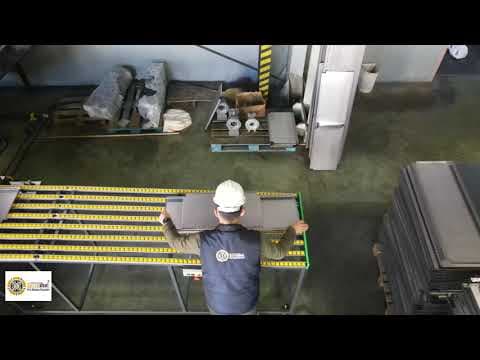
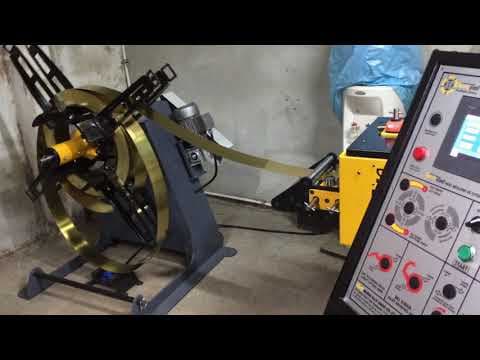
Footage of our lines running in this sector
Frequently asked questions
How is tolerance held on small sections?
On a small section the problem is not force but repeatability. Roll count and station spacing are chosen so the section builds up in stages; thin material forced in one step springs back and the dimension drifts across the shift. A levelling unit is not optional here either.
Is there a risk of scratching painted or coated sheet?
With the right roll surface and feeding arrangement, it is close to nil. On parts with a visible face, what matters is that the profile travels carried rather than dragged along the line; automatic stacking at the exit is preferred for the same reason.
Let us build a line for your furniture profile
Send the profile section, sheet thickness and your surface expectation, and we will come back with the right series and a layout.